
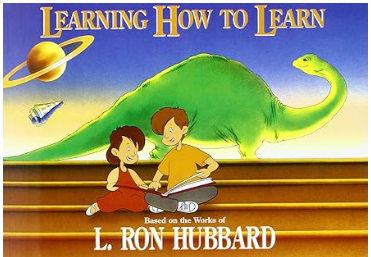
As homeschooling parents, we focus so much on what to teach — math, reading, science — that we sometimes forget the most essential skill of all: how to learn. Learning How to Learn by L. Ron Hubbard gives children tools to notice confusion, pause, and truly understand.
What Kids Learn
Hubbard identifies three common barriers to learning:
- The misunderstood word – skipping words you don’t fully understand blocks comprehension.
- The absence of mass – abstract ideas need something concrete to connect to.
- The skipped gradient – jumping ahead before mastering prior steps creates gaps.
Simple illustrations make these ideas approachable for kids 8–12, while also aligning with modern neuroscience: confusion signals the brain is processing new information
Why Science Supports It
When kids encounter something they don’t understand, their brains pause. Rushing past that moment often leads to frustration or forgotten lessons. Hubbard’s method gives children simple questions to guide themselves:
- “Did I miss a word?”
- “Do I need a picture or real example?”
- “Did I skip a step?”
This kind of gentle self-reflection — pausing to notice what your mind needs next is one of the strongest foundations for becoming an independent learner. In a self-directed environment, where pace and curiosity guide the day, young learners can develop this skill naturally, gently, and with real confidence.
Practical Tips for Parents
Turn “stuck” moments into discovery:
- Read aloud in short bursts and relate examples to your child’s lessons.
- Keep a “curious words” notebook for vocabulary they explore.
- Use visuals, clay, or drawings to “add mass” for abstract concepts.
- Praise noticing confusion, not just correct answers.
These small steps reinforce how the brain consolidates memory: attention, reflection, and multisensory engagement.
Why This Book Matters
Learning How to Learn teaches kids that confusion is part of learning, not failure. It helps them become confident, self-aware learners who can pause, reflect, and grow. For homeschooling parents, it transforms frustration into curiosity and tears into triumphs — all with gentle, practical guidance grounded in science.Bottom line: Short, actionable, and warm, this book equips children with lifelong learning skills, making it an invaluable addition to any homeschool library